Masjid Ayesha Miqat for Makkah: Location, Tips & Transfers
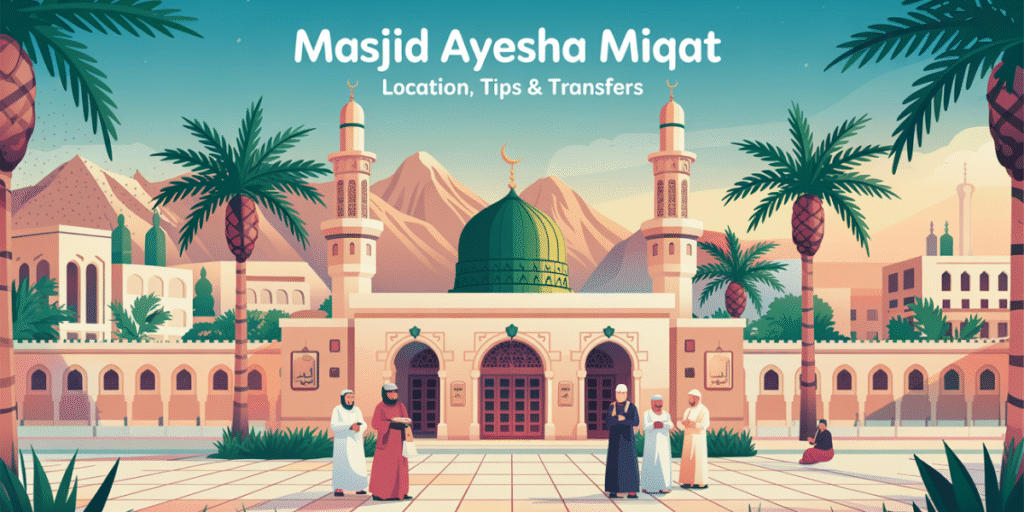
Masjid Ayesha — also known as Masjid al-Taneem — is one of the most essential miqats (designated stations for Ihram) for pilgrims already inside Makkah. Located just 7.5 km from Masjid al-Haram, it benefits those who wish to perform multiple Umrahs or are already residents or travellers within the Haram boundary. The mosque is named after Aisha (RA), the wife of Prophet Muhammad ﷺ, who entered Ihram here on the Prophet’s instructions. Where is Masjid Ayesha Located? Masjid Ayesha is situated in the Al-Tan’im neighbourhood of Makkah, along the main road that connects the city to Madinah. Its proximity to central Makkah makes it the most convenient miqat for many pilgrims in and around the Haram. Religious Significance of Masjid Ayesha This mosque holds deep historical and spiritual significance in Islam: How to Reach Masjid Ayesha Distance & Travel Time Modes of Transport Recommended Taxi and Transfer Services to Masjid Ayesha Choosing the proper transportation is crucial to make your journey to Masjid Ayesha (Masjid al-Taneem) smooth, convenient, and spiritually enriching. Several comfortable, reliable, and pre-bookable options are available, whether travelling solo, with family, or in a group. Below is a detailed breakdown of recommended transfers provided by Ahram Travel, categorised by vehicle type and use case. Sedan Transfers – Best for Solo Travellers or Couples Sedans are a great option if you’re looking for a compact yet comfortable ride. Vans – Perfect for Families and Small Groups These options are tailored for pilgrims travelling in groups or with children, offering ample luggage space and more seating. Luxury Transfers – Executive Comfort for Discerning Travellers If comfort, style, and exclusivity matter to you, especially during sacred moments like entering Ihram, these premium vehicles are highly recommended. Group Transfers – Best for Large Pilgrim Groups For Hajj groups, Umrah tour organisers, or large families travelling together, group-friendly options with higher capacity and multiple seating arrangements are available. Why Pre-Book Your Transfers? Booking your transfer in advance offers several advantages: Final Tip: Combine Travel with Spiritual Focus Masjid Ayesha is not just a place to wear your Ihram – it’s a place of historical and religious reverence. By opting for a pre-arranged and well-reviewed transportation provider, you free up your mental energy to focus entirely on your niyyah (intention), ibadah (worship), and spiritual connection during your Umrah. Frequently Asked Questions (FAQS) Q1: Masjid Ayesha, and why is it essential for Umrah pilgrims? A: Masjid Ayesha, also known as Masjid al-Taneem, is a designated Miqat (Ihram station) for pilgrims already inside the Haram boundary of Makkah. It holds religious significance because Aisha (RA), the wife of the Prophet Muhammad ﷺ, was instructed to enter Ihram here for Umrah. It is the nearest miqat to Masjid al-Haram and the most convenient option for those performing multiple Umrahs. Q2: How far is Masjid Ayesha from Masjid al-Haram? A: Masjid Ayesha is approximately 7.5 kilometres (about 10 to 15 minutes) by car from Masjid al-Haram in Makkah. It’s a short and easily accessible journey by taxi, van, or private transfer. Q3: Can I walk to Masjid Ayesha from the Haram? A: Yes! However, it is not recommended due to the intense heat, traffic, and the physical toll, especially if you plan to enter the Ihram. A comfortable taxi or pre-booked vehicle is a safer and more practical choice. Q4: Is Masjid Ayesha open 24/7? A: Yes, the mosque is open 24 hours a day, 7 days a week. Pilgrims can visit at any time of the day or night to enter into Ihram and perform the two Rak’ah Sunnah prayer. Q5: Is Masjid Ayesha only for women? A: No. While it’s famously associated with Aisha (RA), men and women can use Masjid Ayesha as their miqat point if they are within Makkah and intend to perform another Umrah. It’s equally valid and accessible for all. Q6: Can I take a taxi or Uber to Masjid Ayesha? A: Yes, you can. However, pre-booking a verified transfer service through a trusted provider, such as Ahram Travel, is strongly recommended. This ensures your ride is secure, timely, and comfortable, especially during busy Umrah or Hajj seasons. Q7: Is there parking available at Masjid Ayesha? A: Yes, the mosque has a large parking area. However, parking can be crowded during peak times, such as Ramadan or the Hajj season, so many pilgrims prefer a private car with a waiting driver. Q8: What should I bring when going to Masjid Ayesha for Ihram? A: You should bring your Ihram garments, a bottle of water, a small prayer mat, some cash, and a valid ID. It’s also advisable to carry personal hygiene items, such as tissues or a small towel. Q9: Do I need to perform a complete Umrah again after returning from Masjid Ayesha? A: Yes. Entering the Ihram at Masjid Ayesha marks the beginning of a new Umrah. Once you return to the Haram, you must perform all five rituals: Q10: Can I go to Masjid Ayesha multiple times in a trip? A: Many pilgrims perform multiple Umrahs during their stay in Makkah by returning to Masjid Ayesha and entering Ihram again. However, scholars advise moderation and spiritual sincerity rather than excess repetition. Q11: Is there any fee or permit required to visit Masjid Ayesha? A: No fee or official permit is required to visit Masjid Ayesha. However, staying updated with Saudi regulations through the official Ministry of Hajj and Umrah portal is always best. Q12: Are Masjid Ayesha’s bathrooms and ablution (wudu) areas? A: The mosque has clean bathrooms and ablution areas, separated for men and women. These facilities are regularly maintained, especially during the high season. Q13: What is the best time to visit Masjid Ayesha to avoid crowds? A: Early morning after Fajr, or midday between Dhuhr and Asr, tends to be quieter. Avoid peak prayer times, such as Maghrib and Isha, if you’re hoping for minimal crowds. Q14: Can families and groups hire private transport to Masjid Ayesha? A: Absolutely. A wide range of group vans, private SUVS, and luxury cars